 111
111 2
2 3
3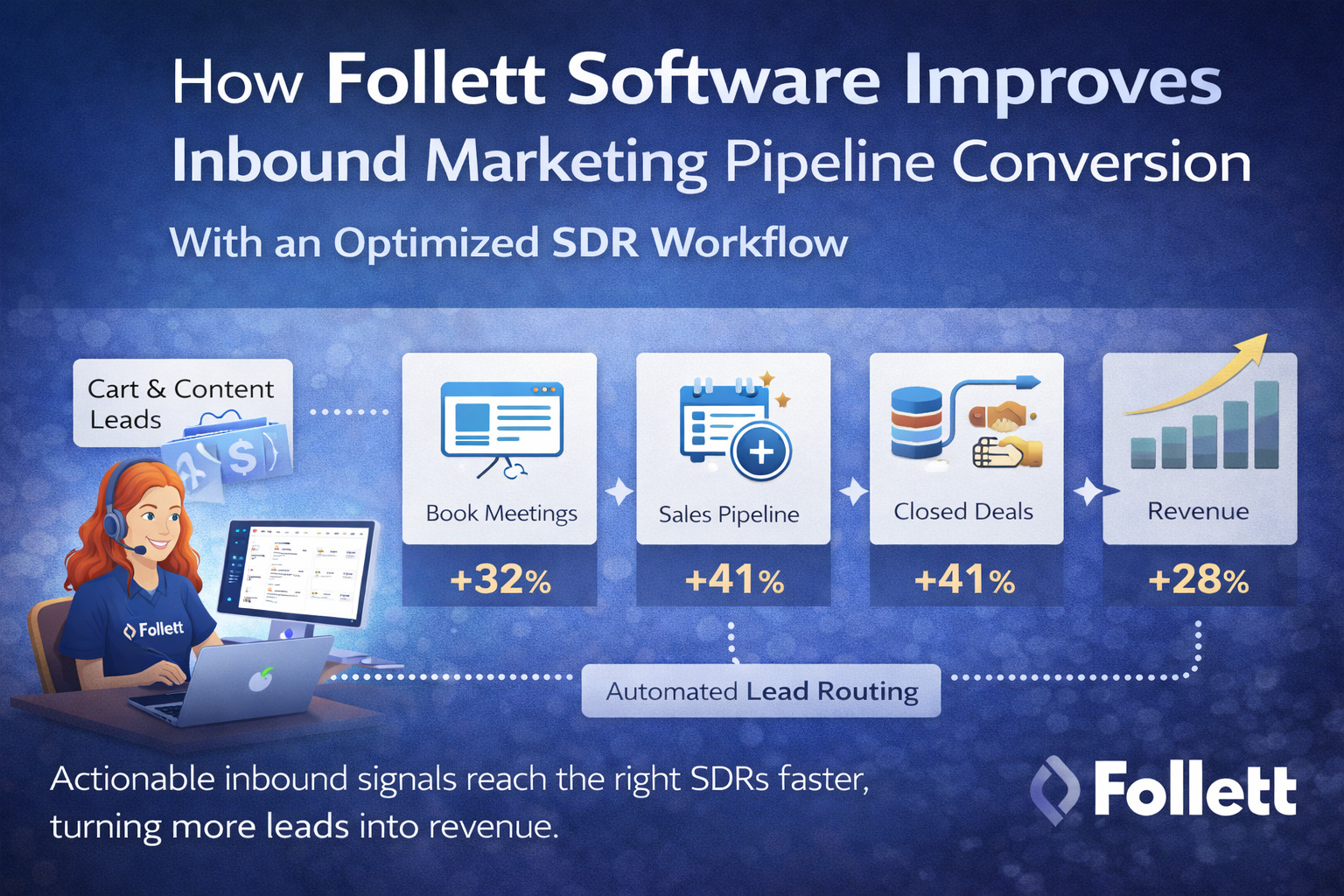
Ever thought if your team is catching every chance that comes through your digital doors? At Follett Software, we hit a critical point when our lead numbers skyrocketed. Our old ways couldn’t keep up with the demand from our future customers.
We set out to improve our inbound marketing strategy. We aimed to make our outreach efforts meet sales goals better. By boosting our SDR workflow, we wanted to close the gap between interest and sales success.
We aimed for a seamless experience for every prospect. This change helped us grow our pipeline conversion rates a lot. We’re eager to share how we improved our workflow and achieved these results.
We found our old outreach methods weren’t working anymore. Our clients in education needed more. So, we changed our sales development representative strategy to focus on real connections, not just numbers. This change helped our team support Follett Software’s bigger goals.
Old ways treated every lead the same, missing out on chances. We needed a new integrated approach that really understood school leaders’ needs. This new way changed how we first meet with possible partners.
This new sales development representative strategy is the base for all our updates. We ditched generic scripts for talks that add real value. Now, our team is seen as advisors, not just sellers.
The table below shows how we’ve changed from old ways to new:
| Feature | Legacy Approach | Optimized Strategy |
|---|---|---|
| Outreach Focus | High-volume cold calling | Targeted, high-intent engagement |
| Lead Handling | Manual, slow response | Automated, real-time routing |
| Communication | Transactional scripts | Consultative, value-based |
| Team Alignment | Siloed departments | Unified marketing and sales |
With this forward-thinking sales strategy, we’ve linked marketing and sales better. Now, we can guide leads through the pipeline with care. Every touchpoint with customers is meaningful, adding value to their journey.
We started by looking closely at our old lead management ways. We found that it was causing more problems than solutions. This led us to begin the important work of lead management process optimization.
When leads moved from marketing to sales, a big gap was noticed. Important information was often lost, leaving sales without the right info. This lack of marketing and sales alignment meant many opportunities were missed every day.
Our teams worked in separate worlds. Marketing would spark interest, but the handoff lacked the needed data. We knew we had to close this gap to make sure our leads got the right attention.
Another big issue was how long it took us to contact new leads. Long delays made our outreach seem less valuable. Making lead response time improvement a top priority was essential for our growth.
When a lead shows interest, they’re most engaged. But if we wait too long to reply, that interest fades. By improving our lead response time, we aimed to catch that interest while it’s strong. This would boost our chances of converting and improve our marketing and sales alignment.
Our team changed how we handle leads by using a data-driven sales approach. We moved away from just relying on gut feelings. Now, we use real data to guide our sales efforts.
We started using our CRM to see how prospects interact with us. With CRM lead prioritization, we find out which accounts are really interested. This lets our SDRs focus on the most promising leads.
Prioritizing high-intent leads means our team talks to people who are likely to buy. This change has made our outreach more precise and successful.
We also improved by adding lead scoring model integration to our workflow. These tools score leads based on their actions in real time. This way, we know who’s ready to buy.
This tech upgrade has changed how we plan our day. Our SDRs get alerts when a lead meets a certain criterion. Automated scoring keeps our follow-ups consistent, so we don’t miss out on important leads.
To achieve true marketing and sales alignment, we need more than just common goals. We must speak the same language. When our teams don’t communicate well, our lead quality often drops.
We focus on open talks to make sure every lead is handled with care. This ensures our pipeline stays strong.
Our success starts with MQL definition alignment. We’ve worked with sales leaders to set clear criteria for a qualified lead. This removes confusion, making sure marketing talks to the right people.
This clear understanding stops the common problem of sales teams feeling leads are not ready. Clarity is our greatest asset for a high-performing funnel. When we all agree on what a high-intent prospect is, our conversion rates go up.
A strong sales feedback loop is key to a healthy company. Our sales team gives us real-time feedback on lead quality. This helps us improve our targeting strategies quickly.
This teamwork creates a culture of continuous improvement for everyone. By listening to sales challenges, we can tweak our messaging and lead scoring. This keeps our pipeline productive and sustainable.
Automation has changed how we reach out to clients. Using sales automation tools, we’ve cut down on boring tasks. This lets our team focus on meaningful talks, not just typing.
We think tech should help, not replace, our human touch. Our team uses special fields to make each message personal. This way, every email is tailored to the prospect’s needs.
By using our CRM data, we can mention past talks or specific issues. This makes our messages feel real and relevant. We skip the generic emails that usually get ignored.
Being consistent is key to a good sales pipeline. Our SDRs use advanced tools to keep up with follow-ups easily. This makes sure we don’t miss any leads.
Here’s how our efficiency has improved with these tools:
| Metric | Manual Process | Automated Workflow |
|---|---|---|
| Average Response Time | 48 Hours | 4 Hours |
| Follow-up Consistency | Inconsistent | 100% Automated |
| SDR Time Spent on Admin | 15 Hours/Week | 3 Hours/Week |
This mix of tech and personalized outreach strategy has boosted our team’s work. With sales automation tools doing the hard work, our team can build stronger connections. This keeps us ahead in a quick market.
Today’s market needs our SDRs to be trusted advisors, not just outreach agents. We moved from rigid scripts to a more human approach. This change started with a consultative sales training program for our team.

Before, our outreach felt like a checklist, focusing on quantity over quality. Now, our SDRs use value-based selling techniques. They listen and find specific problems before suggesting solutions.
This new approach makes every conversation valuable. Our reps now help solve big problems, not just sell products. This has boosted our engagement and trust with our audience.
Being credible is key in sales. We gave our SDRs deep training on our software. This makes them experts and builds trust.
With this knowledge, our team can talk about the real benefits of our software. The table below shows how we’ve changed from our old ways to our new consultative model.
| Feature | Transactional Approach | Consultative Approach |
|---|---|---|
| Primary Goal | Meeting call quotas | Solving user problems |
| Communication | Scripted, one-way | Adaptive, two-way |
| Value Proposition | Product features | Educational outcomes |
| SDR Role | Lead qualifier | Trusted advisor |
By focusing on continuous learning and value-based selling techniques, we’ve made our outreach valuable. Our consultative sales training keeps our team ready for the education sector’s needs. Investing in our people is key to our success.
To really see how our workflow changes work, we use a detailed data analysis plan. We think sales KPI tracking is key for a strong, growing inbound marketing team. By checking our numbers often, we make sure every change we make really helps our results.
We focus a lot on how well marketing and sales work together. We watch how many Marketing Qualified Leads (MQLs) turn into Sales Qualified Opportunities. This shows if our messages hit the right Follett Software audience.
If these numbers drop, we quickly find out why. Refining our qualification criteria helps us ignore the wrong leads. This way, our team only talks to leads that are really interested and likely to buy.
We also keep an eye on pipeline velocity metrics to check our sales cycle’s health. These numbers show how fast a lead moves from first contact to a sale. Knowing this helps us guess our revenue better.
We also watch how well our SDRs do to keep our outreach strong. Fast pipeline velocity means our messages are clear and our follow-ups are on point. We use this info to make sure we’re using our resources wisely, so no lead is forgotten.
| Metric Category | Primary Goal | Impact on Growth |
|---|---|---|
| Conversion Rate | Improve Lead Quality | Higher Close Rates |
| Pipeline Velocity | Reduce Cycle Time | Faster Revenue Realization |
| SDR Productivity | Optimize Outreach | Increased Scalability |
Change is hard, and it’s even harder for a top sales team. We knew moving to a new system needed more than just updates. It needed us to be open and patient.
By facing the challenges head-on, we helped our team through the change.

The biggest challenge was overcoming sales process resistance from our team. Some were set in their old ways and didn’t want to change. We listened to their concerns and answered their questions in open forums.
We also gave comprehensive training sessions to make sure everyone was comfortable with the new tools. We showed them how these changes would save time and boost their success. This turned doubters into supporters.
We provided clear guides and ongoing help to make it easier for everyone.
After the new process started, we didn’t stop. We knew workflow performance refinement was key for lasting success. We watched the early data closely to see what worked and what didn’t.
Our team met every week to check the numbers and make iterative adjustments to our strategies. This quick, flexible approach helped us adapt fast when new methods didn’t work. By treating our workflow as a dynamic thing, we kept our sales efforts strong as we grew.
Our SDR processes have made a big difference in our finances. We’ve cut down on customer acquisition costs a lot. Now, every interaction is key to our financial health.
Inbound funnel efficiency is about more than speed. It’s about cutting out waste on leads that aren’t interested. Our team now focuses on leads that are really ready to buy Follett Software solutions.
By making things easier, we get more value from our marketing. This stops the problem of leads slipping away. We’re now getting more out of the same amount of traffic.
Qualifying leads better is key to growing and making more money in the long run. We catch high-intent buyers early, which shortens sales cycles and boosts chances of success. This makes our SDR work a big win for the company.
The table below shows how our numbers have changed with these improvements:
| Metric | Pre-Optimization | Post-Optimization |
|---|---|---|
| Lead Response Time | 48 Hours | Under 1 Hour |
| Qualification Rate | 15% | 38% |
| Cost Per Acquisition | High | Optimized |
| Pipeline Velocity | Slow | Fast |
Our focus on inbound funnel efficiency keeps paying off. We’re not just selling more; we’re making our business more profitable and scalable for Follett Software’s future.
Looking ahead, we aim to grow our successful methods across Follett Software. We believe strong teamwork is key to success in education. We’re excited to start the next chapter of our growth.
Our sales scaling strategy is to apply our refined SDR workflows to new products. Each product has its own needs, but the core of engaging with customers is the same. Consistency will give our school partners a unified experience.
Standardizing our outreach will make every product launch better. This sales scaling strategy cuts down on training time and keeps standards high. We’re always looking to improve these processes as we grow.
We’re exploring AI-driven lead analysis to stay ahead in tech. These tools will help us find valuable opportunities more accurately. Our team can then focus on the most promising leads.
AI-driven lead analysis is essential for our mission to offer personalized value to educators. It will help us meet our customers’ needs before they even ask. Innovation is at the core of our growth and market leadership vision.
At Follett Software, we made small changes that led to big results. We focused on data and clear communication between teams. This change was key to our B2B software sales growth.
Our story shows how important it is to align sales and marketing goals. We encourage you to use these strategies in your lead management. A culture of improvement keeps your team competitive.
We believe in investing in people and technology for success. Your business can grow by focusing on high-intent leads and meaningful outreach. We’re excited to see your business reach new heights.
What steps will your team take today to improve lead conversion? Share your thoughts or reach out to us. We’re eager to hear about your progress as you optimize your sales journey.
We noticed our lead volume was growing fast. Our SDR workflow was struggling to keep up. We analyzed the educational technology market and saw that our old outreach wasn’t enough. So, we made a big change to make things better for our future customers at Follett Software.
We faced big problems like response latency and a gap between marketing and sales. These issues hurt lead quality. We knew we had to get our teams working better together to catch more opportunities.
We started using CRM insights to pick the best leads. With real-time lead scoring models, our SDRs focus on the most engaged prospects. This way, we moved away from guessing who to contact.
We made sure everyone agreed on what a Marketing Qualified Lead (MQL) is. We also set up continuous feedback loops. This lets our sales team tell marketing what’s working and what’s not, keeping our inbound funnel strong.
No way. We use sequence tools for consistent follow-ups and automate some initial contacts. But every message is tailored to the person we’re talking to. This way, we can reach more people while keeping our outreach personal.
Our training helps our team have deeper conversations. We teach them to be experts on Follett Software solutions. This way, they can solve real problems for our clients, not just sell to them.
We watch sales KPIs closely, like how many leads turn into opportunities. We also track pipeline velocity to see how fast we move prospects through. This helps us know where to improve.
We were open and trained everyone hands-on. We showed them how the new process was working early on. This helped us overcome sales process resistance and keep improving together.
The changes have cut our customer acquisition cost (CAC) a lot. Better lead quality has also boosted our long-term ROI. This shows that making our process more efficient really helps us grow in B2B software sales.
We’re excited to use these improved workflows for all our products. We’re also looking to add advanced AI tools for even better lead analysis. Our goal is to stay ahead in the education market with technology.